1984 in 2025: Why this book is more relevant than ever
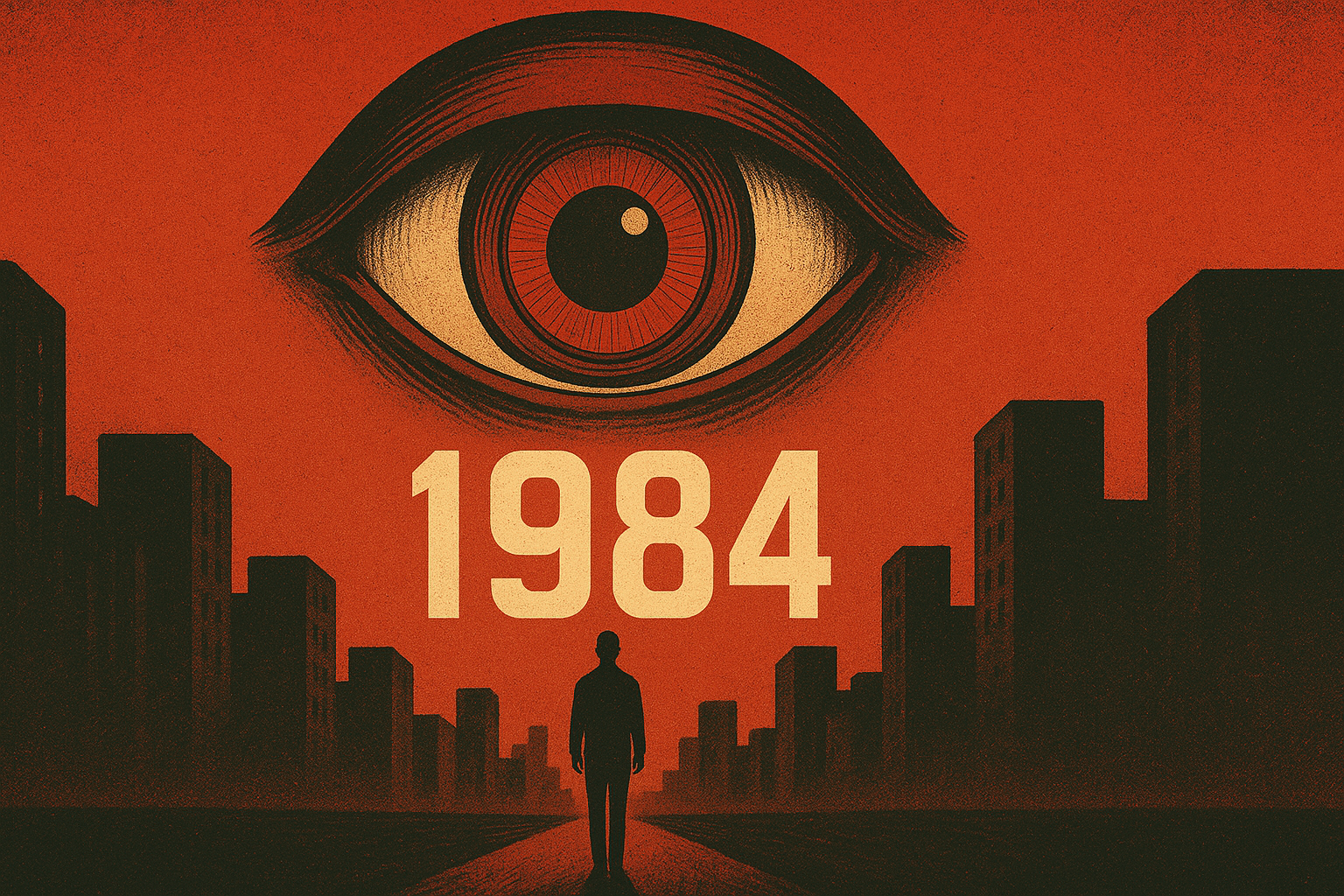
There are books that sit on your reading pile for years, with you telling yourself “someday.” George Orwell’s 1984 was one of those for me. I finally opened it last week, and in hindsight, I’m glad I waited. Glad I read it today, in 2025, with my adult perspective and a certain distance that I probably wouldn’t have had as a teenager.
But I must admit it’s a deeply disturbing read. Reading this book today, in our current political and technological context, doesn’t feel like escaping into fiction. It feels like a brutal confrontation with reality.
Unlock the full article
Drop your email below and I’ll send you the rest right away.
There are books that sit on your reading pile for years, with you telling yourself “someday.” George Orwell’s 1984 was one of those for me. I finally opened it last week, and in hindsight, I’m glad I waited. Glad I read it today, in 2025, with my adult perspective and a certain distance that I probably wouldn’t have had as a teenager.
But I must admit it’s a deeply disturbing read. Reading this book today, in our current political and technological context, doesn’t feel like escaping into fiction. It feels like a brutal confrontation with reality.
A troubling resonance with our time
What amazes me most is realizing this book was published in 1949. Coming out of World War II, when technology was in its infancy compared to ours, Orwell described mechanisms that are part of our daily life.
Of course, he drew inspiration from the totalitarian ideologies of his time. But repeatedly, I was shocked while reading the text. I felt like I was reading a faithful description of what’s happening today, in our world of 2025. The atmosphere of widespread surveillance, information manipulation, falsification of the past, this “closing off to the world” that threatens us… It’s all there.
It’s frighteningly accurate. Orwell didn’t just imagine a dystopian future; he dissected human nature and the mechanics of power with surgical precision that transcends decades without aging a day.
The power of control through language
One concept particularly struck me: Newspeak. This new dictionary invented by the Party, with a terrifyingly simple purpose: to reduce to the strict minimum the number of available words.
The idea is brilliant and terrifying: if you don’t have the words to formulate a rebellious thought, you cannot rebel. Reducing language means reducing thought. It means having absolute power over controlling people.
I can’t help but draw connections to our era, where nuance sometimes seems to disappear in favor of simplistic slogans and truncated communication. When words are lacking, freedom retreats.
The manufacturing of consent and ignorance
The book is full of phrases that hit like punches. Orwell describes a mechanism of subjugation that relies on voluntary ignorance. This sentence sums it all up:
“Until they become conscious they will never rebel, and until after they have rebelled they cannot become conscious.”
It’s a perfect vicious circle. The Party doesn’t seek enlightened citizens, quite the contrary. It needs docile cogs. As Orwell describes:
“It was expected that every member of the Party, even the humblest, should be competent, industrious, and even intelligent within narrow limits, but it was also necessary that he should be a credulous and ignorant fanatic whose prevailing moods were fear, hatred, adulation, and orgiastic triumph.”
This description of fanaticism, a mixture of technical competence and critical ignorance, strangely resonates with certain group dynamics or current movements.
But the most chilling remains the power’s lucidity about itself. O’Brien, the antagonist, doesn’t hide behind false excuses:
“We are not interested in the good of others; we are interested solely in power. Not wealth or luxury or long life or happiness: only power, pure power… We know that no one ever seizes power with the intention of relinquishing it. Power is not a means; it is an end.”
This reminded me of another quote, more contemporary, from Simon Sinek in Start With Why, which is one of my references. In 1984, the protagonist Winston Smith has this terrible realization:
“I understand HOW: I do not understand WHY.”
He sees the mechanism, but the meaning escapes him, perhaps because there is no other purpose than the perpetuation of power for its own sake.
1984 is definitely a reference book. It’s a fascinating read, but above all necessary. Its resonance in 2025 is such that it’s no longer just a literature classic, but a manual for vigilance.
It seems relevant to read or reread it today, putting it in perspective with what we’re living through. Not to sink into paranoia, but to keep our eyes open. To understand what we might experience tomorrow if we stop being attentive.
Summary in Newspeak
Article refers reading 1984. Book doubleplusgood. Description world 2025 accurate. Surveillance and Newspeak doubleplusreal. Proles not conscious. Party controls all. Understand how, not why. Reread mandatory. Ignorance is strength.