VivaTech 2026: Robots take the floor, sovereignty takes the stage
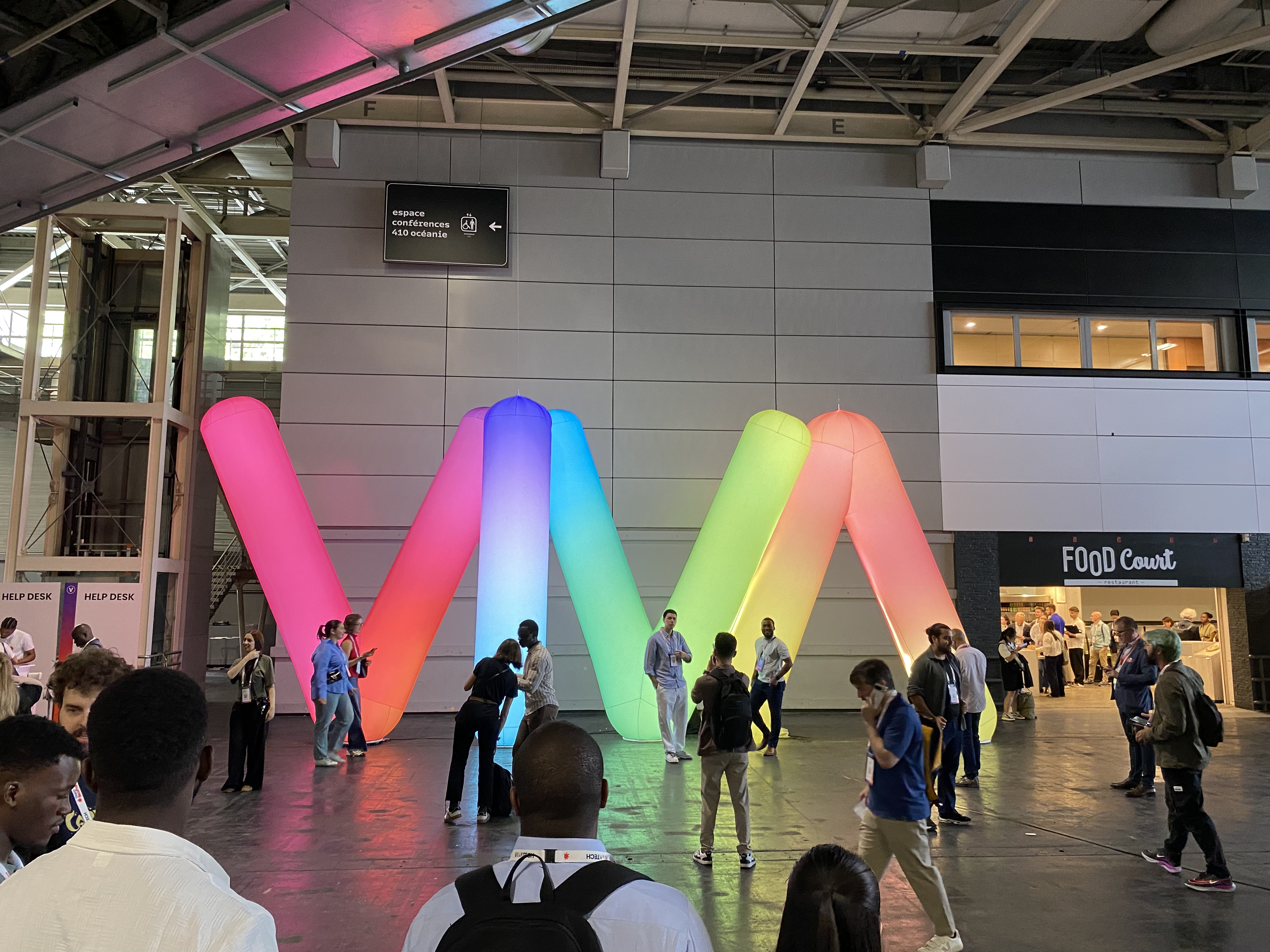
A few months after my week at CES 2026 in Las Vegas, I went to VivaTech in Paris for its tenth-anniversary edition. Part of what I wanted to know was simple: do the trends I noted in Vegas survive contact with a European show? Mostly they did, but with an accent I hadn’t seen in the US. Sovereignty was on half the stands, and nobody seemed embarrassed to say so.
The first thing VivaTech tells you is at the door. The queue was monstrous, worse than previous years, and getting from the entrance to the actual halls was its own small expedition. Whatever you read about the macro mood, the appetite for this show has not cooled.
Unlock the full article
Drop your email below and I’ll send you the rest right away.
A few months after my week at CES 2026 in Las Vegas, I went to VivaTech in Paris for its tenth-anniversary edition. Part of what I wanted to know was simple: do the trends I noted in Vegas survive contact with a European show? Mostly they did, but with an accent I hadn’t seen in the US. Sovereignty was on half the stands, and nobody seemed embarrassed to say so.
The first thing VivaTech tells you is at the door. The queue was monstrous, worse than previous years, and getting from the entrance to the actual halls was its own small expedition. Whatever you read about the macro mood, the appetite for this show has not cooled.
One caveat before I start: unlike CES, I only had a single day here. So this is a snapshot, not a survey. I missed entire halls, stands and conversations, and what follows is the handful of things that stuck with me from one day on the floor.
What stuck with me
If I had to compress the day into a sentence: the robots have left the lab, AI has stopped being a product, and Europe has discovered it has something to protect.
Robotics, humanoids especially, has clearly moved past the demo phase, and it’s Chinese manufacturers driving it. AI was no longer sold as a feature; it sat underneath the coding tools, the security pitches, the shoe design, the shipping routes. And sovereignty, which used to be a line in a politician’s speech, was a theme stands actually built around. The geopolitical backdrop did the rest.
Artificial intelligence: plumbing, not product
AI was everywhere, which by now is unremarkable. What I noticed instead was how rarely anyone used the word as a selling point. It had moved into the tooling.
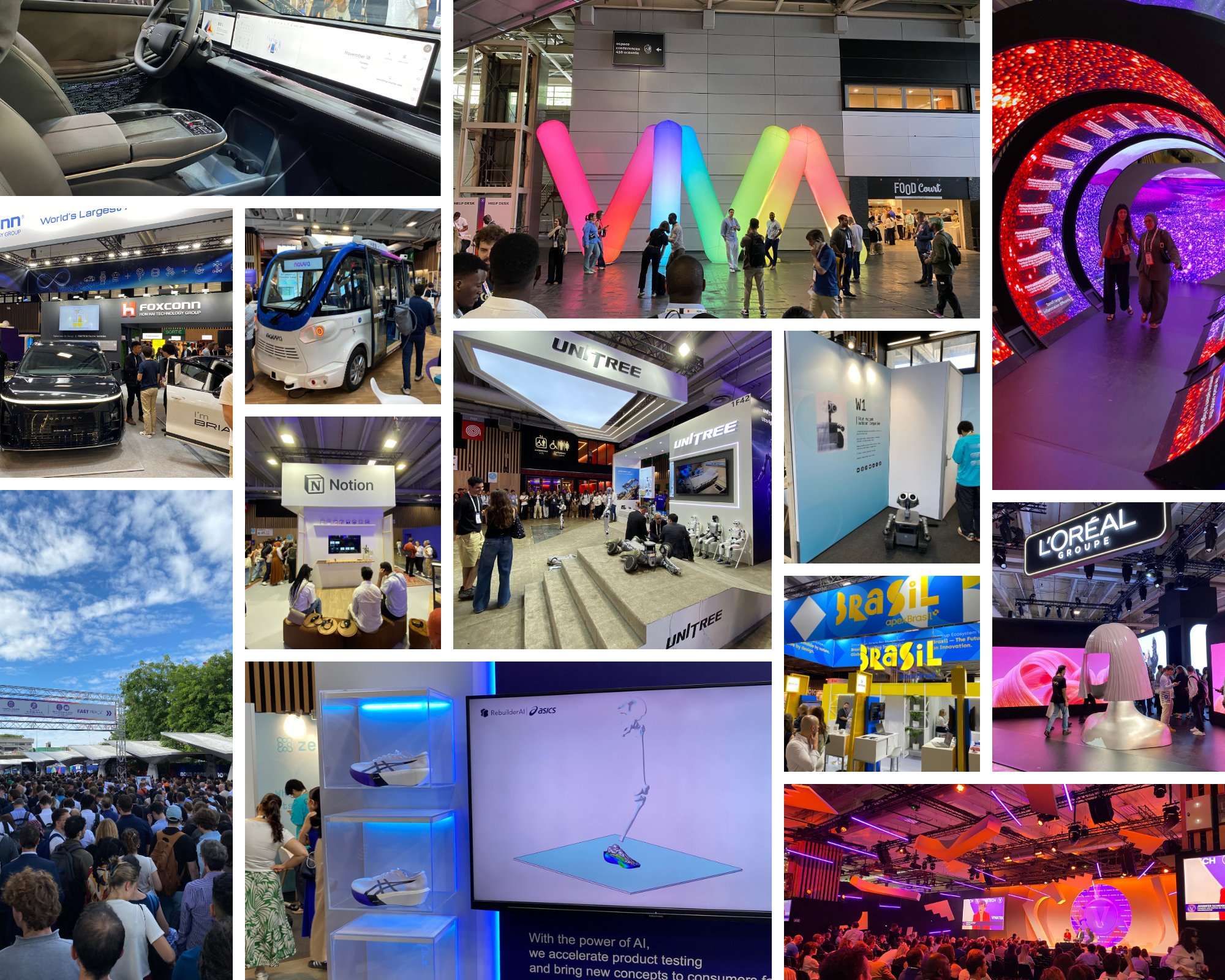
AWS had Kiro, its coding agent, writing code live on the Startup Wall, next to a “Warehouse of Tomorrow / Innovation in Motion” demo where a robotic arm sorted parcels. Notion walked through its AI-native workspace. The more interesting question, how this stuff should be built, got an actual stage: on Bpifrance’s FL Tech stage, a panel argued whether open-source large language models are the right bet for Europe and China, with Kimi, the open model from China’s Moonshot AI, as the reference point.
The applied side was on the design stands. RebuilderAI and ASICS shared a booth “fusing art, science and AI,” using 3D scanning to speed up product testing and get new shoe concepts to market faster. Adobe and DS Automobiles did something similar at the seam between creativity and automotive design. The one that actually stopped me was CMA CGM: a curved wall showing their maritime fleet live, routing container ships around weather, optimising fuel and CO₂ across wind and waves. It’s the least glamorous use of AI imaginable, and probably one of the most valuable.
Robotics: humanoids, and mostly Chinese
If one part of the show had real momentum, it was robotics, and within that, humanoids. Almost all of them came from Chinese makers.
Agibot drew the biggest crowd with a synchronised humanoid dance. It’s a gimmick, but it does show how far the coordination has come; these things move with genuine agility now. The number behind the choreography was the actual news: Agibot said it had built its 10,000th robot. It also showed the A2 series and its OmniHand dexterous hand. Unitree packed its stand with quadrupeds and humanoids.
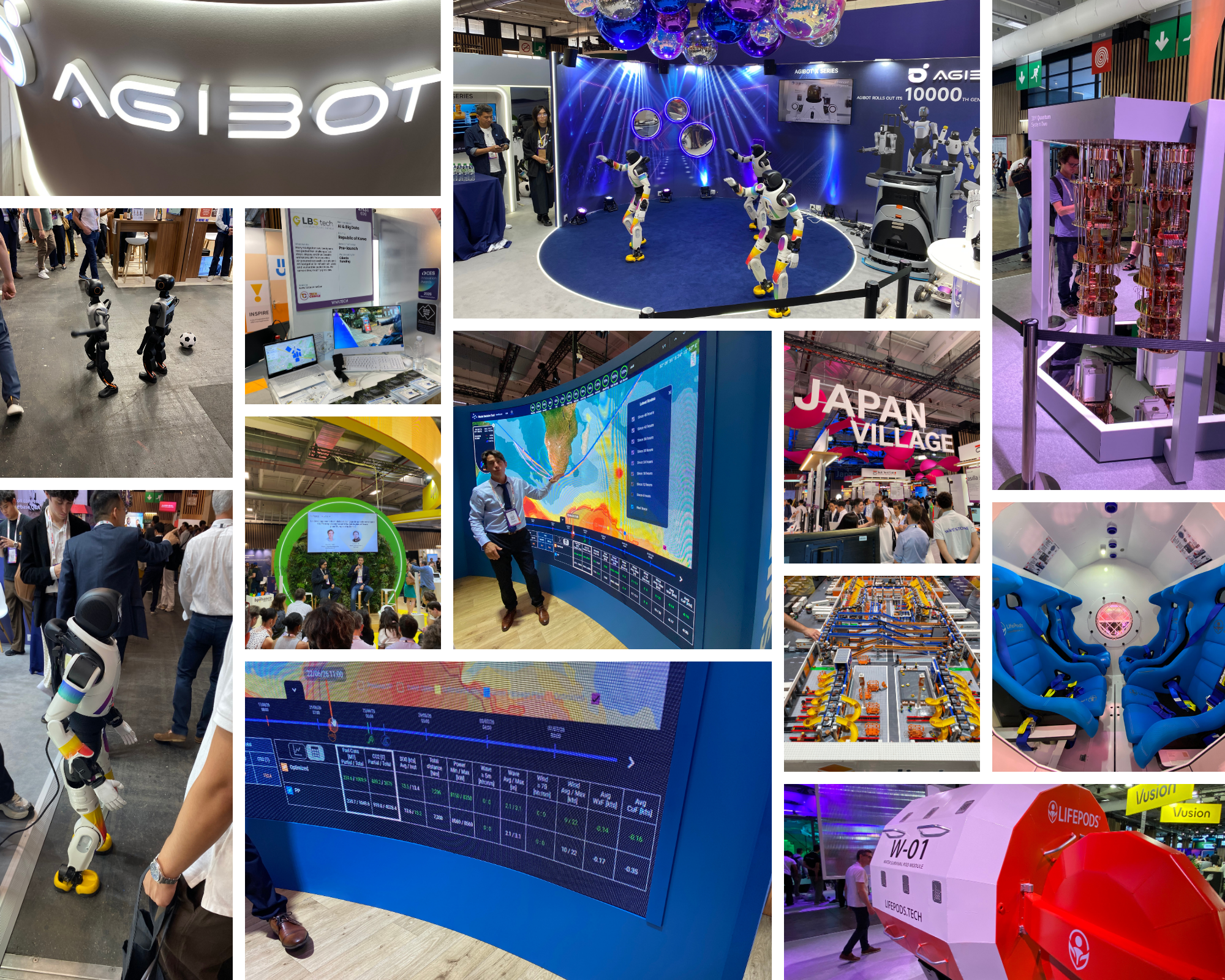
My favourite moment was a lot less polished. A child-sized Booster humanoid was supposed to play with a ball; it kicked it, then took off running into the crowd. The two-robot football match next door was the honest version of where we are: impressive, and still a bit hapless.
On the stranger end, HABS demonstrated controlling a robot through brain signals picked up by a headband, “experience human-robot interaction through brain signals,” as the sign put it. Sequence Robotics (Région Grand Est) showed a manipulator arm built for industrial use.
Mobility and energy
Mobility kept its usual footprint, leaning hard into electrification, autonomy and charging.
The idea I keep coming back to is Evias: wireless charging for vehicles, including dynamic charging while moving, at up to 100 km/h. Picture a motorway with a 5 km charging stretch every 50 km, where cars top up without ever stopping. Whether the economics hold up is another matter, but the vision is clean. Navya showed an autonomous shuttle with a transparent translation screen. And Foxconn (Hon Hai), which now calls itself the world’s largest AI server provider, used VivaTech to push into cars with the Foxtron Model D, a premium EV built around a dual-screen cockpit.
Sovereignty and data independence
This is the part that felt different from Vegas. Sovereignty came up again and again, over cloud, energy, AI and data, and given the current geopolitics nobody had to explain why. It wasn’t only in the keynotes. The Accenture × Michelin guided tour had built a whole “Sovereignty, resilience & data independence” track around it, pointing to startups like AgentVox and Zaubar, and routing you through Scaleway (the European cloud bet), Ivado Labs (Canada Pavilion), Unicorn Mobility (Italy Pavilion), Sequence Robotics, Evias and Yumana, with Flowcate, Binabik and Designovel left for free exploration. A year ago this would have been a side note. Here it was a spine.
Cybersecurity in the age of AI
Microsoft built its presence around a “Microsoft Unlocked – Stories from the heart & soul of innovation” stand, and its security session went for the throat. The slide I remember made a single point about scale: the gap between a vulnerability being discovered and being exploited has shrunk from months to minutes. The argument, AI speeds up the defender but speeds up the attacker just as much, was of course the setup for “and Microsoft can help you stay ahead.” Sales pitch aside, the months-to-minutes framing is the kind of thing that stays with you.
Resilience and physical safety
The sub-theme I didn’t expect was technology for physical survival. Lifepods (by Momentum Technology) showed sealed metal capsules, a “B-01 / W-01 / Q-01” range of “protective survival capsules engineered for extreme threats.” The pitch is almost absurdly simple: put one in your garden, and if a tsunami comes the water can take everything while the capsule floats, upright, long enough to keep you alive when there is no time to run. Strange, a little dystopian, and obviously useful in some parts of the world.
On personal safety, CTS showed Zone HSS1, a wearable “AI tour guide agent / AI-powered safety management” device built with Newjak. And LBS Tech, from South Korea, went after a real gap: most navigation apps pretend pedestrian obstacles don’t exist, the steps, the slopes, the entrances you can’t get into. LBS Tech maps accessibility data and offers AR navigation for wheelchair users and pedestrians who can’t just route through anything. It picked up a CES Innovation Award in 2026, and you can see why.
Appendix: companies and stands observed
- AWS — Kiro AI coding agent; “Warehouse of Tomorrow” logistics demo
- Microsoft — “Microsoft Unlocked”; AI-era cybersecurity session
- Bpifrance — FL Tech stage panel on open-source LLMs (Kimi / Moonshot AI)
- Agibot — A2 humanoid series, 10,000th robot milestone, OmniHand
- Unitree — quadruped and humanoid robots
- Booster — child-sized humanoid (football demo)
- HABS — brain-signal human-robot interaction (with Unifrance, Innov8)
- Sequence Robotics — manipulator arm (Région Grand Est)
- Evias — wireless / dynamic EV charging (in motion up to 100 km/h)
- Navya — autonomous shuttle, transparent translation screen
- Foxconn / Foxtron — Model D electric vehicle
- CMA CGM — maritime fleet routing and optimization
- RebuilderAI × ASICS — AI-driven 3D product design
- Adobe × DS Automobiles — design / creativity stand
- Lifepods (Momentum Technology) — survival capsules (B-01 / W-01 / Q-01)
- CTS — Zone HSS1 — AI safety wearable (with Newjak)
- LBS Tech — accessibility data and AR navigation (South Korea)
- Scaleway — European cloud
- Ivado Labs — Canada Pavilion
- Unicorn Mobility — Italy Pavilion
- Yumana, Flowcate, Binabik, AgentVox, Zaubar, Designovel — Accenture × Michelin tour
- Notion — AI workspace demos
- L’Oréal Groupe — immersive beauty experience
- Colissimo / La Poste — sorting-warehouse model
- KPMG — “House of…” VR arena (ICAROS)
- Engie — Metanow (methane), electricity trading
- apexBrasil / Just Travel — Brazil pavilion
- Japan Village — Japan pavilion